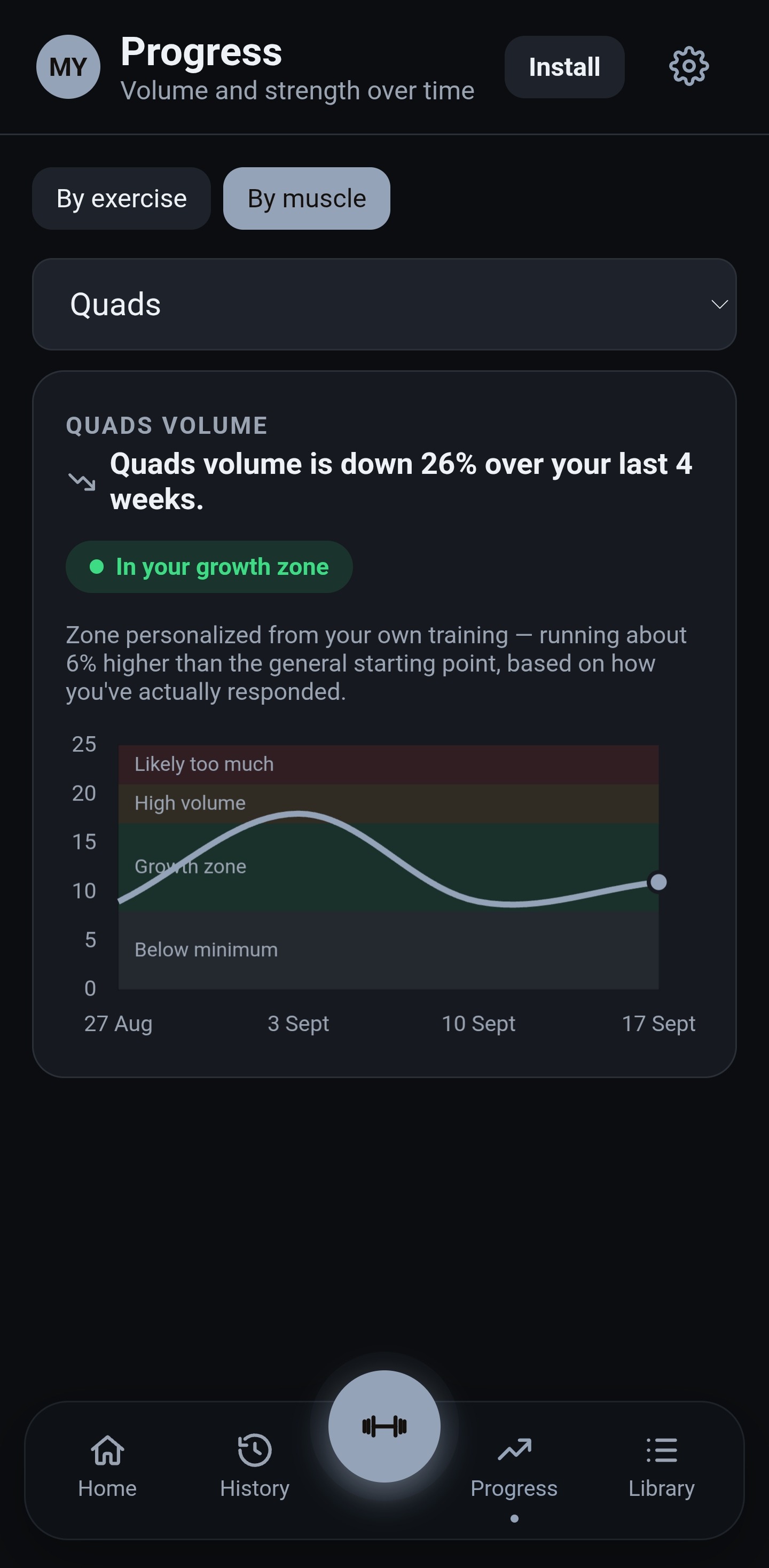
Your growth zone starts from the literature — then adjusts to you
Every muscle ships with a minimum, maximum-adaptive, and maximum-recoverable weekly set count (MEV / MAV / MRV) drawn from published volume-landmark research — the same numbers for everyone, on day one. From there it's just a starting point. Once a muscle has enough of your own training logged, MYPertrophy checks whether you've been comfortably handling volume at or above the default with no plateau in sight, or struggling to recover even below it, and nudges your zone accordingly. Nothing is silently overridden — it tells you exactly when and how far a zone has moved.
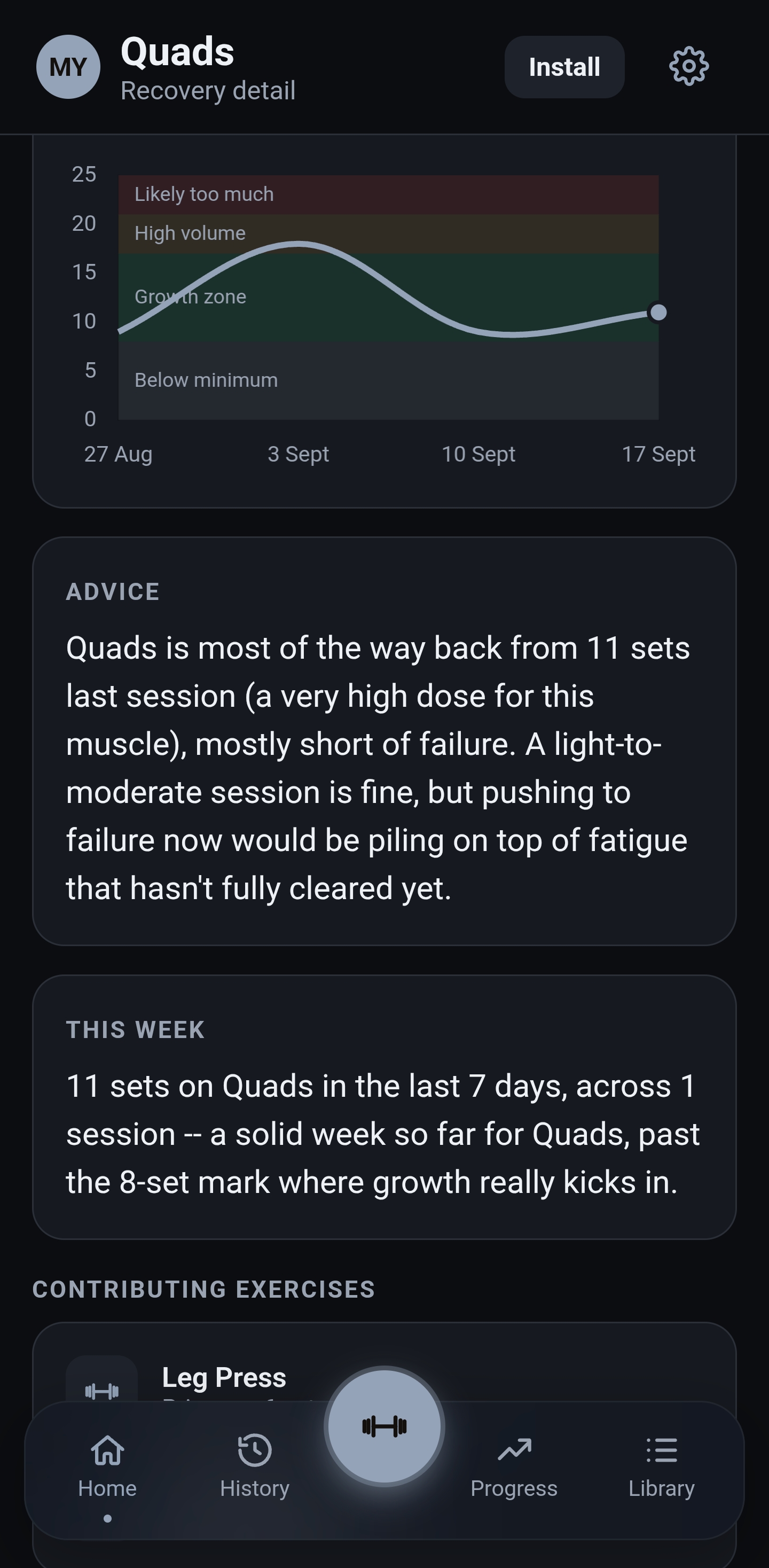
It knows the difference between a lot of volume and a lot of volume close to failure
A high set count on its own doesn't tell the whole story — the same 11 sets land very differently depending on how close to failure they were taken. MYPertrophy's recovery advice weighs both together, so a heavy dose taken mostly short of failure gets a different read than the same dose pushed to the limit — and says which one it's looking at, plainly, rather than reducing it to a single fatigue percentage.
- 1The same logic catches plateaus, too: if a flat or dropping estimated 1RM still hasn't turned around a couple of sessions after a deload, a lighter version of the same movement probably isn't the answer — so it looks for a different exercise hitting the same primary muscle instead, your own logged library first, and offers a one-tap swap right inside the suggestion box.
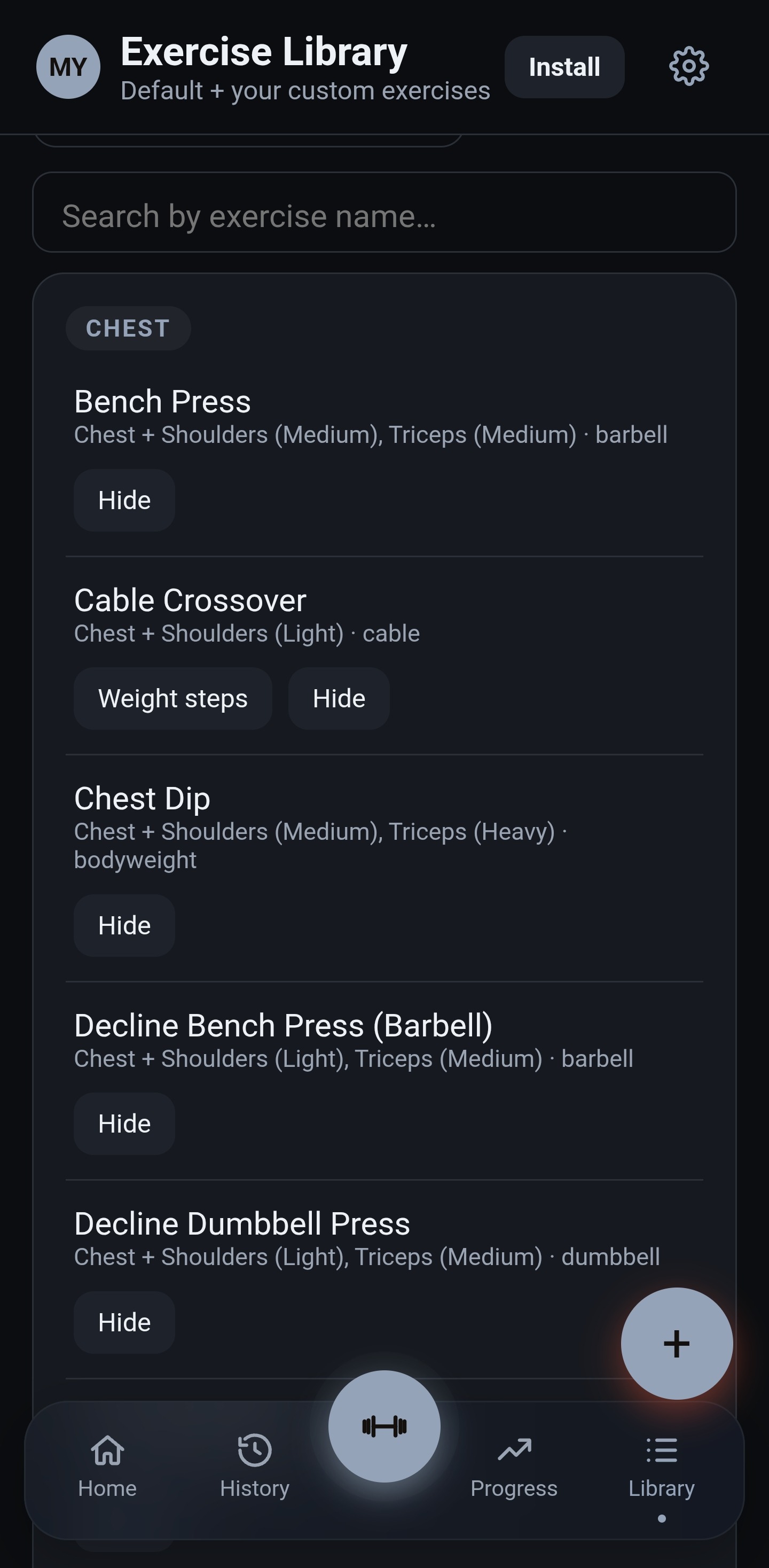
Every exercise is tagged down to how much each secondary muscle carries
None of the calibration above works without knowing what an exercise actually trains. Every entry in the library — Bench Press, Cable Crossover, Chest Dip, and the rest — is tagged with a primary muscle plus every secondary it meaningfully involves, each rated Light, Medium or Heavy rather than a flat yes/no. Add your own exercise and it goes through the same tagging, checkboxes and all, so a custom movement counts toward volume exactly as precisely as a library one.